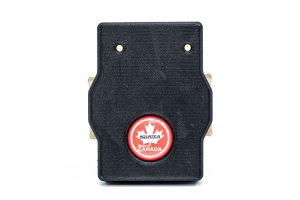


PREORDER 19104 : USB-C Connector (Available end of January 2026)
$98.00
External USB-C Access Port – Power, Control & Workflow Efficiency
To complement the performance of your camera and housing setup, Aquatica offers an optional external USB-C access port. This sealed bulkhead provides a dedicated, watertight path to the camera’s USB-C terminal, opening up a range of practical options for power, data and control—without repeatedly opening the housing.
Available on backorder
Key Uses
1. External Power for Extended Shoots
The USB-C access port allows you to connect a compatible USB-C power source (such as a power bank or external battery pack) in dry environments or on the surface, enabling:
-
Extended recording times for high-bitrate video and continuous shooting
-
Reduced reliance on internal batteries during long days on the boat or in the pool
-
Quick top-ups between dives without removing the camera from the housing
This is especially useful for demanding 4K+ recording, time-lapse sessions, or long days of back-to-back dives where conserving internal battery changes reduces the risk of introducing leaks.
2. High-Speed Data Offload Without Breaking the Seal
With the camera safely installed in the housing, the USB-C connection can be used (in a dry environment) to:
-
Transfer files at high speed directly from the camera to a laptop or workstation
-
Backup critical footage on the boat or on set without opening the housing
-
Maintain a controlled environment inside the housing and minimize wear on O-rings by reducing the number of open/close cycles
This greatly improves workflow efficiency on liveaboards, expeditions, and commercial shoots.
3. Tethered Control and Remote Operation (Where Supported)
Depending on the camera and software used, the USB-C access may support:
-
Tethered shooting for topside pool work, tank testing, or controlled environments
-
Remote control and monitoring via compatible applications
-
Firmware updates and camera maintenance through the housing, again reducing the need to open it unnecessarily
This is particularly valuable for technical or scientific setups where the housing may be mounted in a fixed position and accessed remotely.
| Weight | 1 lbs |
|---|---|
| Dimensions | 3 × 3 × 3 in |
Important Notes
-
The USB-C bulkhead is designed to remain fully connected and sealed before entering the water. Cables must not be connected or disconnected underwater.
-
Actual functions available (power delivery, data transfer, tethering, external recording, etc.) will depend on camera firmware, connected devices, and third-party software support.
-
As with all Aquatica penetrations, the USB-C port is built around a precision-machined, O-ring sealed bulkhead, maintaining the housing’s depth rating when properly installed and maintained.
By integrating this external USB-C access, the housing extends the camera hybrid potential beyond the dive itself—streamlining power management, accelerating data handling, and enabling more advanced control workflows, all while keeping your system sealed, secure and ready for the next descent.
Recommended USB-C Pigtail for Charging (Not Included)
To power the camera through the housing’s USB-C bulkhead, an internal USB-C pigtail cable is required to connect the camera to the inside of the connector, and a standard USB-C power cable is used externally.
Internal pigtail (inside the housing)
Use a short, flexible USB-C cable with the following characteristics:
-
Connectors: USB-C male to USB-C male
-
Length: Approx. 15–30 cm (6–12″) to avoid excess loops inside the housing
-
Profile: At least one low-profile or 90° (right-angle) USB-C plug on the camera side to keep clear of other controls and minimize stress on the port
-
Rating: USB 2.0 or higher with USB Power Delivery (PD) support up to at least 60 W (more than sufficient for powering and charging the camera)
-
Cable type: Ultra-flexible jacket, suitable for routing around camera and housing controls without creating tension or sharp bends
This internal pigtail remains connected between the camera and the inside of the bulkhead and is not intended to be disconnected during normal use.
External cable (outside the housing)
On the outside, you simply connect:
-
A USB-C male to USB-C male PD cable between the bulkhead and a compatible USB-C power bank or AC adapter.
-
For systems using a USB-A power source, a USB-C to USB-A PD-capable cable or adapter may be used, provided it delivers sufficient current as specified by the power bank/charger manufacturer.
Important:
-
All connections must be made and verified in a dry environment before entering the water.
-
Cables are not to be connected or disconnected underwater.
-
Ensure there is no tension on the internal pigtail and that it does not interfere with camera controls or the closing of the housing back.
With the correct pigtail and external cable, the USB-C bulkhead becomes a reliable way to keep your camera powered for long recording sessions while preserving the integrity of the housing’s seal.